In This Guide
Choosing a fence involves more than deciding what looks best from the curb. The right material also depends on how much maintenance you want to handle, your budget, the amount of privacy you need, and how the fence will perform through Indiana’s changing seasons. Wood and vinyl are two of the most popular options, but each offers different advantages. This guide compares wood vs. vinyl fencing to help you decide which material is the better fit for your home or property.
Wood Fencing at a Glance
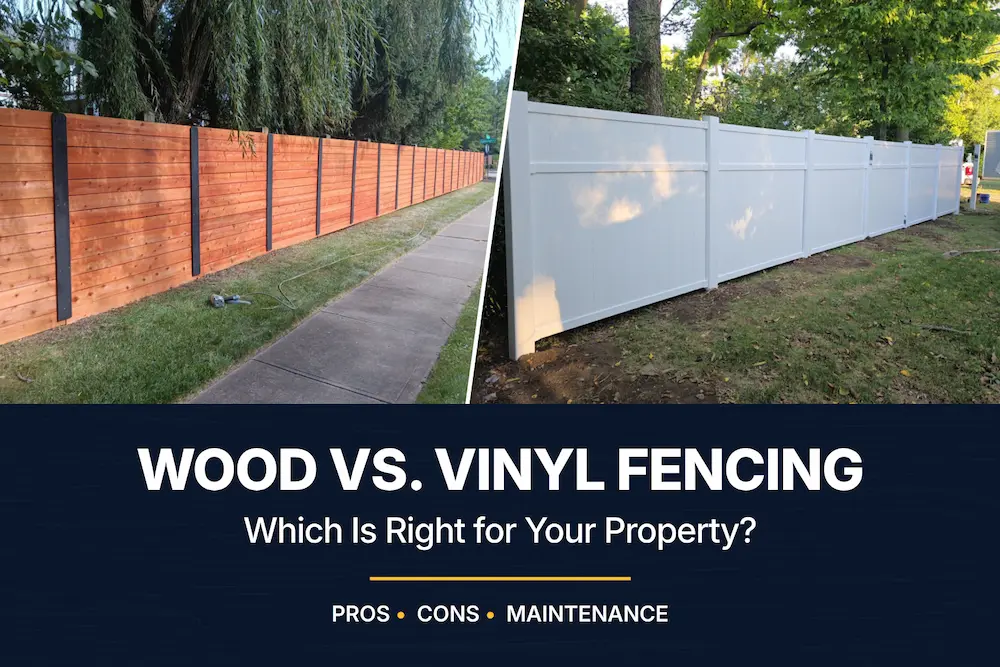
Wood fencing has a natural, traditional appearance that complements many home styles. It is also highly customizable. Boards can be arranged in different heights and patterns, and the finished fence can be stained or painted to coordinate with the property.
For homeowners who value warmth, character, and design flexibility, wood is often an appealing choice. However, it requires ongoing care to protect it from moisture, fading, insects, and normal weathering.
Advantages of Wood Fencing
- Natural appearance that works well with traditional and modern homes
- Wide variety of styles, heights, stains, and paint colors
- Can be adapted around slopes and unique property layouts
- Damaged individual boards can often be replaced
- Typically has a lower initial material cost than vinyl, depending on the wood species and design
Considerations Before Choosing Wood
Wood is not maintenance-free. Periodic cleaning, staining, painting, or sealing may be needed to help preserve its appearance and limit moisture damage. Boards can eventually warp, crack, fade, or rot, especially when the fence receives frequent moisture or has poor drainage around the posts.
The amount of maintenance will depend on the type of wood, how the fence was installed, its exposure to sun and water, and the finish used.
Vinyl Fencing at a Glance
Vinyl fencing provides a clean, uniform appearance with less routine upkeep than wood. It does not need to be stained or painted, and most dirt can be removed with water and mild soap. Vinyl is available in privacy, semi-privacy, picket, and decorative styles, although the range of colors and finishes may be more limited than wood.
Vinyl can be a strong option for property owners who want privacy and a finished appearance without committing to regular refinishing.
Advantages of Vinyl Fencing
- Low routine maintenance
- Does not rot, splinter, or require painting
- Consistent color and appearance
- Easy to clean
- Available in several privacy and decorative styles
Considerations Before Choosing Vinyl
Vinyl fencing commonly costs more upfront than a basic wood fence. While individual components can be replaced, repairs may be less straightforward if the original style or color is no longer available.
Quality also matters. A properly installed, well-made vinyl fence is better prepared to handle normal seasonal changes than a thin or poorly supported product. Posts, spacing, hardware, and installation methods all affect the finished fence’s stability.
Wood vs. Vinyl Fencing: Key Differences
Appearance and Customization
Wood offers the greatest design flexibility. It can be cut into custom patterns and refinished when you want a different color. Its natural grain also creates variation that many homeowners prefer.
Vinyl offers a smoother and more uniform look. White is common, but other colors and wood-look finishes may be available depending on the product. If you want a crisp appearance that stays relatively consistent without refinishing, vinyl may be the better match.
Best for natural character and customization: Wood
Best for a clean, consistent appearance: Vinyl
Maintenance
Wood generally needs more attention over time. Cleaning and protective finishes help reduce fading and moisture-related deterioration. Any loose boards, damaged sections, or signs of rot should be addressed before the problem spreads.
Vinyl usually only requires occasional cleaning. It does not need to be sealed, stained, or painted, making it attractive for homeowners who would rather limit seasonal maintenance.
Best for lower maintenance: Vinyl
Upfront Cost and Long-Term Value
A basic wood fence often has a lower upfront cost, but the final price depends on the wood species, fence height, style, property conditions, and total length. Decorative designs and premium lumber can increase the investment.
Vinyl often costs more initially, but its lower maintenance needs may offset part of that difference over time. When comparing estimates, consider more than the installation price. Future cleaning, staining, painting, repairs, and your own time are also part of the long-term cost.
Best for a lower initial investment in many cases: Wood
Best for reducing long-term maintenance expenses: Vinyl
Privacy
Both materials can provide excellent privacy when installed as solid panels or closely spaced boards. Wood makes it easier to customize the exact height, board spacing, and decorative top. Vinyl privacy panels offer a consistent barrier with no gaps between individual pickets in many designs.
Before selecting a height, check local zoning rules, easements, and any homeowners association requirements that apply to your property.
Best for privacy: Either material, depending on the chosen design
Repairs
Wood fences can develop localized damage, but individual boards are often replaceable. Matching the color of a repaired board to an older, weathered fence can take time.
Vinyl does not experience rot or splintering, but a cracked panel or damaged post may require a matching replacement component. This is one reason it helps to choose a quality product from an established manufacturer.
Best for simple individual-board repairs: Wood
Which Fence Performs Better in Indiana Weather?
Indiana properties experience summer heat and humidity, heavy rain, winter freezes, and occasional strong winds. Either wood or vinyl can work well here when the material is appropriate for the site and the fence is installed correctly.
Wood needs protection from repeated moisture exposure. Good drainage, suitable lumber, proper post installation, and routine sealing or staining can help reduce premature deterioration.
Vinyl does not absorb moisture like wood, but temperature changes and wind loads still matter. Correct post depth, spacing, reinforcement, and room for normal material movement are important to the fence’s performance.
For both options, installation quality is just as important as the material itself. A fence that is not properly supported or adapted to the property’s grade may lean, shift, or develop problems sooner.
If you are planning additional exterior improvements, you may also want to compare whether a deck or patio is better for your Indiana home.
Is Wood or Vinyl Better for Your Property?
Wood may be right for you if:
- You prefer a natural look
- You want more freedom to customize the style or color
- A lower upfront cost is a priority
- You are comfortable with periodic maintenance
- You want to be able to replace individual boards as needed
Vinyl may be right for you if:
- You want to minimize ongoing maintenance
- You prefer a clean, consistent appearance
- You do not want to stain or paint the fence
- You are comfortable with a higher initial investment
- Long-term convenience is more important than extensive customization
There is no single best fence material for every property. The right choice depends on the look you want, how long you plan to remain at the property, the site conditions, and whether you prefer a lower upfront cost or less maintenance later.
Thinking About Adding a Fence to Your Property?
Whether you are considering a wood privacy fence, low-maintenance vinyl fencing, or another style, our team can help you compare your options and plan a fence that fits your property.
Frequently Asked Questions About Wood and Vinyl Fencing
Which lasts longer: a wood or vinyl fence?
Vinyl fencing generally requires less maintenance and is not vulnerable to rot or insect damage. A well-built wood fence can also last for many years, but its lifespan depends more heavily on the wood species, installation quality, drainage, weather exposure, and routine sealing or staining. The quality of the materials and installation affects the longevity of either option.
Is vinyl fencing more expensive than wood fencing?
Vinyl often has a higher upfront cost than a basic wood fence, although pricing depends on the fence height, style, total length, site conditions, gates, and materials selected. Wood may cost less initially but usually requires more maintenance over time. Comparing both the installation cost and expected upkeep provides a better picture of the long-term investment.
Does a wood fence need to be stained or sealed?
Most wood fences benefit from a protective stain or sealant to limit moisture absorption, fading, and weather-related deterioration. The type of wood, product used, and exposure to sun and moisture will determine how often the finish should be reapplied.
Can vinyl fencing withstand Indiana winters?
Quality vinyl fencing can perform well through Indiana’s seasonal temperature changes when it is installed correctly. Proper post depth, spacing, reinforcement, and installation methods are important because freezing ground, strong winds, and normal material movement can affect any fence.
Do I need a permit to install a fence in Indiana?
Fence requirements vary by city, county, neighborhood, and project. Rules may address fence height, placement, corner visibility, easements, utility locations, and setbacks. Homeowners should also review any homeowners association requirements and arrange for underground utilities to be marked before installation.
Can wood or vinyl fencing be installed on a sloped yard?
Yes. Both materials can be installed on many sloped properties, but the installation method may differ. A fence may follow the grade or use stepped sections depending on the slope, fence style, and desired appearance. The property should be evaluated before selecting the best layout and material.