In This Guide
Does your home feel chilly in the winter, too warm in the summer, or uncomfortable no matter how often you adjust the thermostat? Insulation could be part of the problem. With Indiana’s seasonal temperature swings, gaps or insufficient insulation can make it harder to keep your home comfortable.
The signs your home needs more insulation are not always obvious. Some also point to air leaks, ductwork problems, or heating and cooling issues. Here are seven signs worth investigating before deciding which improvements your home needs.
Some Rooms Are Much Colder or Warmer Than Others
If one bedroom is always cold while the rest of the house feels comfortable, it is worth looking beyond the thermostat. Missing or uneven insulation can allow more heat to move through the walls, ceilings, or floors in certain areas.
Pay attention to upstairs bedrooms, rooms over garages, and additions that never seem to match the temperature of the main house. Insulation may be one factor, but airflow, duct leaks, and sun exposure can also affect room temperatures.
Your Heating and Cooling Bills Seem Unusually High
Insufficient insulation can increase the energy needed to maintain a comfortable indoor temperature. If your home loses heat quickly in winter or gains it quickly in summer, your HVAC system may need to run longer.
Before blaming insulation, compare energy usage rather than just the dollar amount on your bill. Rate increases, unusually hot or cold weather, and changes in your household can all affect costs. Consistently high usage is a reason to investigate your home’s insulation and air sealing.
You Feel Drafts Even When Windows and Doors Are Closed
A draft near a window does not automatically mean you need new windows—or more insulation. Air can enter through gaps around trim, attic access points, plumbing openings, and other parts of the home.
Insulation slows heat transfer. Air sealing closes gaps that let air move in and out. Many homes benefit from addressing both, so adding insulation alone may leave some comfort problems unresolved.
Your Floors Feel Uncomfortably Cold
Tile and other hard flooring can naturally feel cool, but a floor that stays unusually cold may point to an insulation or air leakage problem below it.
This is especially worth checking when the room sits over an unconditioned crawl space, basement, or garage. The right insulation approach depends on how that space is used and whether moisture is present. Adding material without considering those conditions can miss the underlying issue.
Your Furnace or Air Conditioner Runs for Long Periods
Heating and cooling equipment normally runs longer during extreme weather. However, if your system struggles to maintain the set temperature even in milder conditions, your home may be losing or gaining heat too easily.
Low insulation levels and air leaks can contribute to that extra workload. Equipment maintenance, thermostat settings, and ductwork should also be checked before deciding that an insulation upgrade is the solution.
Your Attic Insulation Looks Thin or Uneven
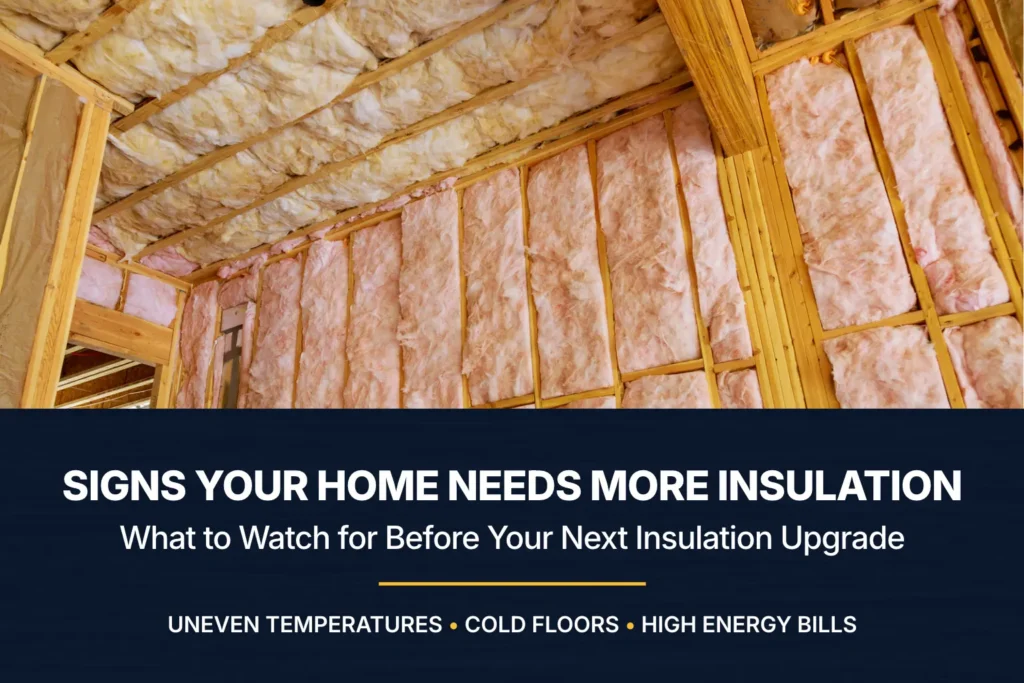
In an attic where insulation belongs on the floor, visible bare areas or uneven coverage can be clues that the insulation needs attention. Loose-fill insulation at or below the tops of the floor joists may also warrant a closer assessment.
Appearance alone does not tell the whole story. The material, depth, installation quality, and R-value—the measure of resistance to heat flow—all matter. Attics insulated at the roofline require a different evaluation.
You do not need to climb through the attic to investigate. A professional can check coverage and access difficult areas without disturbing existing materials.
Existing Insulation Has Gaps or Visible Damage
Insulation that has been displaced, compressed, or affected by a leak may need repair or replacement rather than another layer added over it.
If you notice damp material or staining, identify and correct the moisture source before insulating the area. Simply covering the problem can leave the original issue unresolved.
Older insulation does not automatically need to be removed. Its condition and performance matter more than its age alone.
What Should You Do If You Notice These Signs?
Start by noting which rooms feel uncomfortable, when the problem occurs, and whether your energy usage has changed. These details can help narrow down where to look.
A professional evaluation can help identify whether you need more insulation, air sealing, repairs, or a combination of improvements. A home energy assessment can provide a broader look when the cause is unclear.
The goal is to address the areas causing problems rather than assume every part of the house needs new insulation. Attics, exterior walls, and floors above unconditioned spaces may each require a different approach.
Frequently Asked Questions About Home Insulation
Can I add new insulation over existing insulation?
In some situations, yes. Existing insulation should be dry, suitable to remain in place, and checked for damage or other concerns first. Air leaks and moisture problems should be addressed before additional insulation is installed.
Does an older home automatically need more insulation?
No, but it is worth checking what is already there. An older home may have been upgraded, while a newer home can still have gaps or installation problems. An evaluation is more useful than judging by the year the house was built.
Will more insulation fix every draft?
No. Drafts are caused by air movement through gaps and openings. Insulation and air sealing often work together, but adding insulation alone may not stop air leaks.
How much insulation does my home need?
The amount depends on the area being insulated, the existing material, the home’s construction, and the appropriate R-value. A single depth recommendation does not apply to every insulation type or part of the house.
Do I need to replace all of my insulation?
Not necessarily. Some homes need additional coverage in specific areas, while others need damaged material removed or air leaks sealed. The condition of the existing insulation helps determine the scope.
Request an Estimate for Your Insulation Project
If you have noticed signs your home needs more insulation, AY Remodeling & Restoration can help you plan your next improvement. We offer insulation services for homeowners in Carmel, Indianapolis, and throughout Indiana.
Call 317-828-1191 or contact us online to request an estimate and discuss your insulation project.