
In This Guide
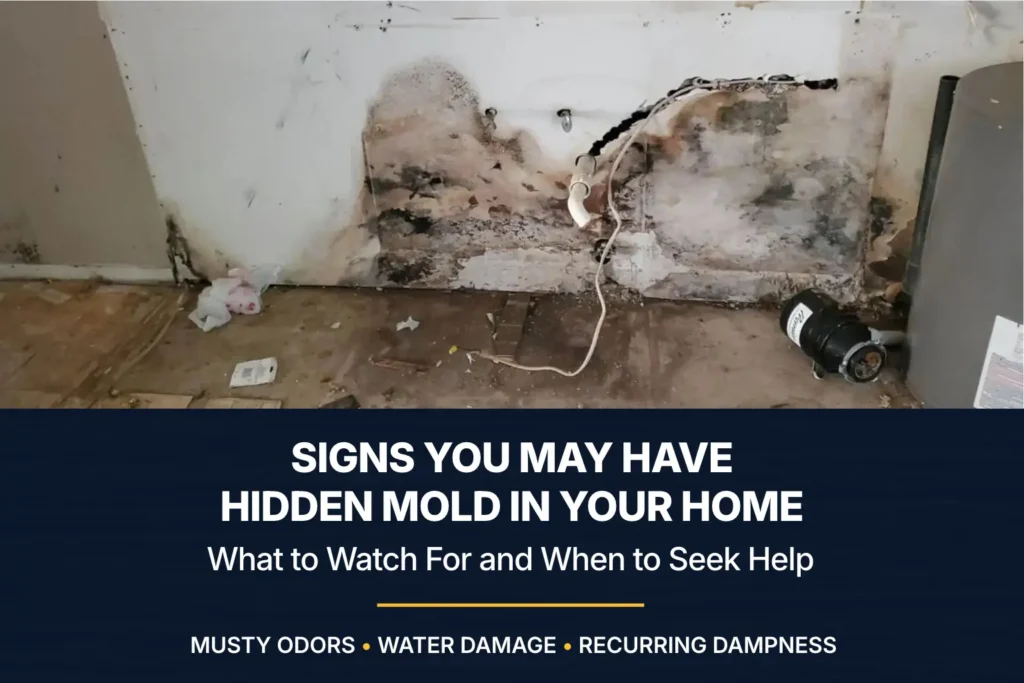
Hidden mold in your home is not always easy to spot. It can grow behind drywall, beneath flooring, or in other areas where moisture goes unnoticed. By the time visible growth appears, the problem may extend beyond the surface.
A persistent musty smell, recurring dampness, or signs of water damage can be reasons to investigate. These warning signs do not automatically mean you have mold, but they can point to moisture conditions that allow it to grow. Here is what to watch for and when to seek help.
A Musty Smell That Does Not Go Away
A lingering musty or earthy odor can be a clue that mold is growing somewhere out of sight. You might notice it when opening a closet, entering the basement, or spending time in a particular room.
Cleaning and air fresheners may temporarily cover the smell without addressing its source. If the odor keeps returning, especially near an area with a history of leaks, it deserves a closer look. A smell alone cannot confirm mold or tell you how extensive the problem is.
Water Stains or Changes in Walls and Ceilings
Discolored patches, bubbling paint, peeling wallpaper, and swollen trim can indicate moisture damage. Even if the surface looks dry now, the materials behind it may have been affected.
Pay attention to changes such as:
- Stains that return after painting
- Paint that blisters or peels in the same location
- Warped baseboards or cabinet panels
- Drywall that appears swollen or deteriorated
These changes do not prove mold is present. However, they are reasons to investigate a possible leak or moisture problem before making cosmetic repairs.
Previous Leaks or Flooding
A past roof leak, overflowing appliance, or flooded basement can leave moisture in materials that are difficult to see. Carpet may feel dry on top while the padding underneath remains damp.
Mold can develop when affected materials are not dried thoroughly. If an old leak area develops an odor or new discoloration, have it checked—even if the original leak was repaired.
For more information about potential moisture sources, read our guide to common causes of water damage in Indiana homes.
Frequent Condensation or Persistent Dampness
Repeated condensation on windows or pipes can signal a moisture problem. Bathrooms that stay damp and basements with consistently humid air also deserve attention.
These conditions do not confirm hidden mold, but they can support mold growth. A humidity gauge can help you monitor indoor conditions. The EPA recommends keeping relative humidity below 60%, ideally between 30% and 50% when possible.
Reducing humidity can help, but a dehumidifier will not repair an active leak or resolve existing mold inside damaged materials.
Mold That Keeps Coming Back
If visible mold returns after cleaning, the moisture source may still be present. Surface cleaning alone may also leave affected materials untreated.
Recurring growth around a window, along a baseboard, or inside a cabinet is a reason to look beyond the visible spot. Addressing both the mold and the water problem is essential to reducing the chance of recurrence.
Where Hidden Mold May Develop
Hidden mold can occur in areas that remain damp or have experienced water damage, including:
- Behind drywall, wallpaper, or paneling
- Beneath carpet and padding
- Inside wall cavities near leaking plumbing
- Behind cabinets or furniture
- In crawl spaces and attic areas affected by moisture
Locating hidden growth may require a professional assessment. Avoid cutting into walls or pulling away suspected moldy materials yourself, because disturbing them can release spores.
What to Do if You Suspect Hidden Mold
Start by noting where you notice odors, stains, or dampness and whether they change after rain or appliance use. Take photos of visible damage and share any history of leaks or flooding.
Arrange to have active leaks addressed promptly. Avoid painting over suspected mold or covering damaged materials before the underlying issue is evaluated.
An assessment can help determine what is affected, where the moisture is coming from, and which materials may need cleaning or removal. Proper cleanup also requires resolving the moisture problem.
Frequently Asked Questions About Hidden Mold
Can mold grow behind walls without being visible?
Yes. Mold can develop on hidden surfaces when enough moisture is present. A musty odor or history of water damage may prompt an investigation even when the room’s visible surfaces appear normal.
Does a water stain always mean there is mold?
No. A stain indicates past or current moisture exposure, but it does not confirm mold. Finding the source and checking the affected materials can help determine what work is needed.
Do I need mold testing before cleanup?
Not always. The EPA says sampling is usually unnecessary when visible mold is present. For suspected hidden mold, an experienced professional can assess whether testing would provide useful information.
Can I paint over mold?
Painting over mold does not resolve the problem. Mold needs to be removed appropriately, and the moisture source must be addressed before refinishing the surface.
Concerned About Hidden Mold in Your Home?
If you have noticed a musty smell, recurring mold, or moisture damage, AY Remodeling & Restoration can assess the affected area and discuss the next steps. We provide mold remediation, cleanup, and related repairs in Carmel, Indianapolis, and throughout Indiana.
Call 317-828-1191 or tell us what you have noticed through our online request form.