
In This Guide
A house fire can leave you facing difficult decisions long after the flames are out. Along with burned materials, your home may have smoke residue, lingering odors, and water damage from firefighting efforts. Knowing what happens next can make the recovery process feel more manageable.
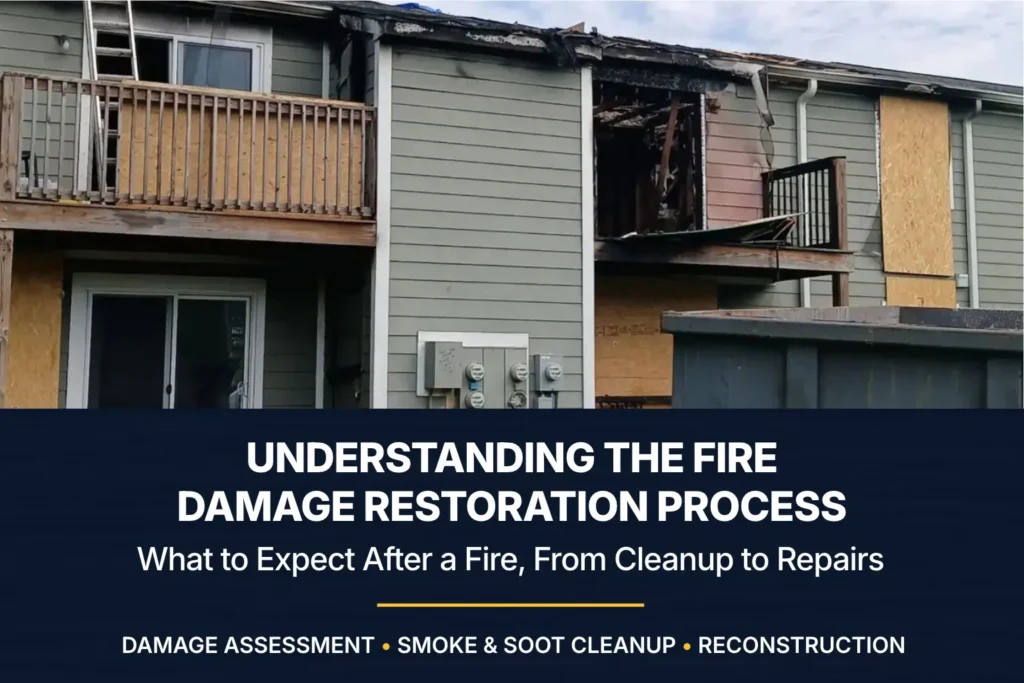
The fire damage restoration process involves assessing the damage, protecting the property, cleaning affected areas, and completing necessary repairs. Every home requires a different plan, but understanding the main stages can help Indiana homeowners prepare for the work ahead.
What Should You Do After a House Fire?
Your first priority is safety. Wait until the fire department or local authorities say it is safe to enter your home. Permission to enter does not necessarily mean the property is ready to live in or that utilities are safe to use.
Once you can safely access the property, document visible damage and contact your insurance company to report the loss. Avoid disturbing damaged materials or starting cleanup before getting guidance. The American Red Cross recommends professional help for smoke odors and soot, which can be difficult to remove.
A restoration assessment can then help you understand what needs immediate attention and what repairs may be required.
Assessing the Fire, Smoke, and Water Damage
The restoration process begins with an inspection of the affected areas. Damage may extend beyond the room where the fire started, so the assessment should consider more than visibly burned surfaces.
Areas that may need attention include:
- Walls, ceilings, floors, and structural framing
- Smoke and soot residue in nearby rooms
- Water left behind by hoses or sprinkler systems
- Damaged windows, doors, and roofing
- Insulation and other concealed building materials
The assessment helps establish the scope of work, including what can be cleaned or repaired and what needs replacement. Some damage may only become apparent as affected materials are removed, so the restoration plan may need adjustments along the way.
Securing and Protecting the Property
Before extensive cleanup begins, the home may need temporary protection. Broken windows, damaged doors, or openings in the roof can expose the interior to weather and unauthorized entry.
Depending on the damage, property protection may include board-ups, temporary coverings, and stabilization of affected areas. Addressing these needs helps protect the property while the remaining work is planned.
Removing Water and Drying Affected Areas
Water damage is often part of fire recovery. Fire hoses and sprinkler systems can leave standing water or soak materials throughout the home.
When moisture is present, water damage restoration may be needed alongside fire cleanup. This can involve extracting water, drying affected areas, and determining which wet materials can be retained.
Drying and cleanup may overlap with other restoration stages. The goal is to address the moisture before rebuilding covers affected areas.
Removing Materials That Cannot Be Restored
Some materials are too badly burned, damaged, or contaminated to remain in the home. Controlled removal makes it possible to access affected areas and prepare for repairs.
Depending on the extent of the damage, this may involve removing drywall, insulation, flooring, cabinetry, or other building components. Materials should be evaluated individually rather than assuming everything needs replacement—or that everything can be saved.
Removing damaged materials can also reveal issues that were hidden during the initial inspection.
Cleaning Smoke, Soot, and Lingering Odors
Smoke and soot cleanup is a separate part of restoration from repairing burned materials. Even areas with little visible fire damage may need attention.
The appropriate cleaning approach depends on the affected surface and the type and extent of residue. Odor treatment also needs to address the source of the smell rather than simply covering it with fragrance.
Painting over affected walls or replacing a visible finish alone may leave underlying damage unresolved. Cleanup, necessary material removal, and odor treatment should be considered together.
Repairing and Rebuilding the Home
Once affected areas have been prepared, restoration moves into repairs and reconstruction. The amount of work depends on how deeply the fire, smoke, and water affected the property.
Repairs may include:
- Structural framing repairs
- Roofing, siding, window, or door replacement
- New insulation and drywall
- Flooring and cabinet replacement
- Painting and finish work
- Necessary electrical, plumbing, or HVAC repairs by qualified professionals
For some homes, the work is limited to a few rooms. Others require substantial reconstruction. Required permits, inspections, material availability, and the repair scope all influence the schedule.
Final Cleanup and Walkthrough
As the work is completed, final cleanup and a walkthrough give you an opportunity to review the restored areas and ask questions.
Discuss any remaining work, care instructions for new materials, and documentation you should keep. Clear communication throughout the project helps you understand what has been completed and what still needs attention.
How Long Does Fire Damage Restoration Take?
There is no single timeline that applies to every fire. A smaller project with limited cleanup and repairs will have a different schedule from a home that needs major rebuilding.
The timeline can depend on the extent of the damage, drying needs, repair complexity, permits, inspections, and material delivery. Insurance-related decisions may also affect when portions of the work can proceed.
Ask for an estimated schedule based on your property’s assessment, along with updates if new damage or other delays change the plan.
Frequently Asked Questions
Can a home be restored after a fire?
Many homes can be repaired after a fire, but the extent of restoration depends on the damage. An assessment helps determine which parts of the property can be restored and which require replacement or reconstruction.
Can I clean smoke and soot damage myself?
Professional evaluation is a good starting point. Smoke odors and soot can be difficult to remove, and cleanup methods need to suit the affected materials. The American Red Cross notes that this work may be best handled by professional fire restorers.
Can I stay in my home during restoration?
That depends on the condition of the property and the work being performed. Follow guidance from local authorities and qualified professionals about occupancy, utility safety, and access to affected areas.
Does fire damage restoration include water damage?
It can. When firefighting efforts leave water or moisture behind, extraction and drying become part of the restoration plan.
Ready to Start Your Restoration Project?
Recovering from a fire can feel overwhelming. Having a clear assessment and a plan for cleanup and repairs can help you take the next step.
AY Remodeling & Restoration provides fire and smoke damage restoration in Carmel, Indianapolis, and throughout Indiana. Our services include property protection, smoke and soot cleanup, odor removal, water extraction, and repairs and reconstruction.
Call 317-828-1191 or request a free estimate to tell us about your property and discuss the next steps.